
Microtia Reconstruction

Seattle, WA

Introduction

Introduction to Microtia Reconstruction

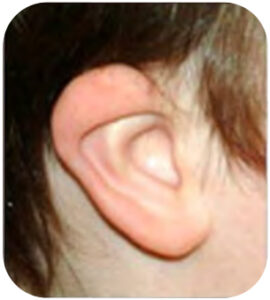
Creating ears for kids born without them, providing a more normal and confident sense of themselves. Microtia is the incomplete development and growth of the outer ear. It leads to a small, abnormally-shaped, or absent ear. It occurs with an incidence of 1-10 per 10,000 births and can be divided into four types.

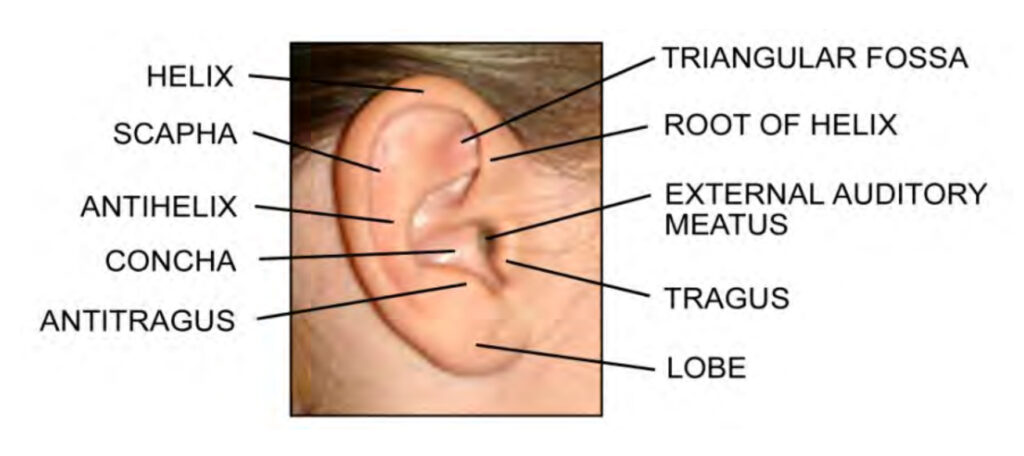
Normal Ear Anatomy


Microatia can be divided into 4 types:


Grade 1

The ear is small but it has most of the features of a normal ear. The ear canal is usually open.

Grade 2

The ear is small and missing some features. The ear canal may or may not be open. When there is no ear canal it is called aural atresia.

Grade 3

The ear lobe is present but in a different position. There is often a small bud of cartalge. These childeren usually have aural atresia.

Grade 4

When the ear is missing it is called anortia.

Microtia Reconstruction

Although associated with many syndromes, microtia typically occurs in isolation and only on one side. The right side is more commonly affected, and males have a 30% higher affected rate than females.

Many children with microtia also have a small jaw on the same side. This is called hemifacial microsomia (HFM) or craniofacial microsomia (CFM). Many children with microtia also have mild abnormalities of their normal ears. About 10% of children with microtia have abnormalities in other systems. These may include facial clefts, heart defects, and eye, kidney, and vertebral abnormalities.

Most of the time we do not know what caused the ear to form abnormally. Exposure to high doses of vitamin A and maternal diabetes during pregnancy are two of the known causes of microtia. There are also some syndromes associated with small ears. These include Treacher-Collins syndrome, Oculoauricolovertebral syndrome, and Goldenhar syndrome. Microtia may run in families, but a specific gene has not been identified yet. Right now there are no tests to show the cause of microtia.

For over the past 20 years, Drs. Kathleen Sie and Craig Murakami have to lead a team that treats microtia patients. Dr. Bhrany is a part of that team along with Drs. Michael Nuar and Randy Bly. The microtia reconstruction program is centered at Seattle Children’s Hospital while adult patients are treated at the University of Washington Medical Center.

Options for the management of microtia include:

  • Observation with no repair
  • Placement of an ear prosthesis
  • Ear reconstruction with either autologous rib cartilage or alloplastic (Medpor) implant
  • After consultation and discussion with the patient and family, a plan that meets both reconstructive and functional goals is chosen. If a microtia reconstruction is chosen, the type of repair is coordinated with hearing management and the possibility of aural atresia repair (creation of an ear canal).

A close up shot of a man and young girl hugging each other and smiling brightly. The background is out of focus leading your eyes to the connection between the two. - Microtia Reconstruction in Seattle, WA
  • Start by having your child’s hearing tested. We expect that your child will have some hearing loss in the small ear. The hearing test will also tell us about the hearing in the other ear. Children with normal hearing in one ear often develop normal speech and language. However, the presence of hearing loss in one ear can also present some challenges for young children as they learn speech and language. There are two main types of hearing tests: BAER (brainstem auditory evoked responses) and behavioral testing (audiogram). BAER testing is performed if your child is too young to cooperate with behavioral testing. Behavioral testing is done when the child is mature enough to cooperate. Other tests may be recommended, based on your child’s age. Based upon the results of the hearing tests, the audiologist and otolaryngologist will discuss the options for hearing management.

  • Indications for microtia management should be based on a discussion with the patient and the patient’s family. It is important to understand the patient’s goals and expectations for ear reconstruction. We strive to help patients understand the different options and possible outcomes. A reconstructed ear will make it easier to wear glasses and may permit the patient to use a hearing aid.

    The majority of patients with microtia also have aural atresia (absence of an ear canal) associated with hearing loss. Management of conductive hearing loss has implications on microtia reconstruction. All options both for hearing rehabilitation and ear reconstruction are thoroughly discussed with the patient and family. Drs. Sie and Bhrany work with the patient and family to generate a cohesive plan that includes the management of the ear and hearing.

What are the options for hearing for patients with microtia?

HEARING REHABILITATION OPTIONS IN UNILATERAL AURAL ATRESIA

From a surgical planning perspective, one of the main decision points in determining if a patient is an appropriate candidate for the creation of an ear canal (Atresiaplasty). The decision is based on high-resolution computed tomography (CT) of the temporal bones typically done around age 4 years. Obtaining the CT scan at about 4 years of age obviates the need for sedation, allows for mastoid bone growth, and may mitigate the potential effects of radiation on the developing brain. This timing also allows for the CT scan to screen for occult congenital cholesteatoma. Traditionally, autologous cartilage microtia reconstruction was performed prior to atresiaplasty. More recently, multiple surgeons have reported atresiaplasty before or simultaneous with microtia reconstruction with good outcomes.

What are the options for microtia reconstruction?

The only surgical microtia reconstruction option for many years utilized autologous (the patient’s own) rib cartilage, and surgeons preferred to wait until the patient was at least 6 years of age for multiple reasons: (1) the opposite ear is near full size, (2) the rib cartilage is of adequate size, and (3) the patient is able to understand the reconstructive options. The last point could be considered a disadvantage in that families may prefer to undergo the reconstruction as soon as possible and before school begins.

The introduction of alloplastic (Medpor implant)

The advantages and disadvantages of each type of microtia reconstruction option are described below. Drs. Sie and Bhrany have extensive discussions with patients and their families as well as reviewing photographs of patients who have undergone various reconstruction techniques to aid in their decision.

  • The initial consultation centers around your and your child’s goals of ear reconstruction and an examination of the ears in the context of an overall head and neck examination and hearing management.

    During your consultation, options for ear reconstruction including observation with no repair, placement of an ear prosthesis, and ear reconstruction with either autologous rib cartilage or alloplastic (Medpor) implant are discussed. The type of repair is coordinated with hearing management and the possibility of aural atresia repair (creation of an ear canal). A method is chosen that meets both reconstructive and functional goals.

    Pre and post-operative examples of other similar microtia reconstructions are reviewed. The details of the procedure and post-operative care are explained, and any questions you may have are answered. If a plan is confirmed to move forward with surgery, a surgery date is scheduled after a discussion with our patient care coordinator.

  • Prior to surgery, one more pre-operative visit may be required. This visit typically involves a pre-operative history and physical at Seattle Children’s Hospital for our pediatric patients or the University of Washington Medical Center for adult patients. This visit is performed to assess any medical issues present and to ensure that surgery proceeds in the safest manner. Pre and post-operative instructions are reviewed, and this visit is also an opportunity to ask additional questions that may have arisen after your initial surgery scheduling.

  • Once in the pre-operative area, the patient and family will meet the nursing and anesthesiology staff who will take care of you during the procedure. Drs. Sie and Bhrany will meet with you and your family prior to the procedure to review the procedure and discuss any last-minute questions present. After the procedure is performed, the patient will be taken to the recovery room.

    A head dressing will be in place as well as a drain tube placed behind the ear. For patients who have undergone first-stage microtia repair with rib cartilage, the drain will remain in place for two days, and the patient will be admitted to the hospital for two days. For patients who have undergone reconstruction with a Medpor implant, the patient will be admitted overnight and the drain removed the next morning.

  • The first post-operative visit will be approximately one to two weeks after surgery to remove dressings and evaluate healing. You will then follow-up likely follow-up at one month after surgery and usually every three months to six months for the first year after your surgery to ensure adequate healing.

Why Choose Us?

Amit D. Bhrany, MD is a double-board certified plastic surgeon whose goal is to partner with his patients to provide the best possible care for aesthetic facial rejuvenation and reconstruction, and head and neck surgery. He has been a faculty member of the University of Washington (UW) since 2008 and trains other surgeons in Facial Plastic Surgery and Head and Neck Surgery, both at the UW School of Medicine and as an invited speaker around the country. In addition to taking care of our patients at Seattle Face & Skin, Dr. Bhrany cares for patients at UW Medicine, the Seattle Cancer Care Alliance, and Seattle Children’s Hospital. From the moment you contact our office, we focus on your needs to ensure you fully understand the possibilities, limitations, and opportunities available to produce the best outcome for you. Dr. Bhrany is an active member of the AAFPRS (American Academy of Facial Plastic & Reconstructive Surgery).

Microtia Reconstruction FAQs

LogoCrest

Patient Reviews

  • I felt so cared for

    Dr. Bhany performed facial reconstruction surgery after melanoma removal on my face. I’m about 6 weeks out from surgery and I’m so pleased with how the scar is progressing. Dr. Bhrany did an amazing job. I think after a year, you won’t even be able to see the scar. Dr. Bhrany and his team were amazing, I felt so cared for.


    More Reviews

    -Anonymous, Realself

  • My nerve function is normal now

    I had Dr. Bhrany remove a large rapidly growing Merkel Cell Tumor involving the parotid gland with facial nerve paralysis. Following two prior surgeries within the past year and six weeks of radiation. After many hours of surgery, tumor and parotid gland removed, facial skin graft was also performed, my recovery has been amazing. My nerve function is normal now, my salivation seems unchanged, and my scar is almost invisible! ! was very blessed and fortunate to have Dr. Bhrany as my surgeon.


    More Reviews

    -Anonymous, Realself

  • Dr. Bhrany is an amazing surgeon

    Dr. Bhrany is an amazing surgeon who I highly recommend. He performed reconstructive surgery on my upper lip five months ago and did a fantastic job. My upper lip is symmetrical again and there is no evidence that can be seen indicating surgery was performed. Dr. Bhrany and his teams are extremely professional, attentive to detail, responsive, friendly, and want the best result for the patient. I could not be more pleased with my experience with Dr. Bhrany and am so grateful to have him as my surgeon.

    More Reviews

    -Anonymous, Realself

Schedule a Consultation

Contact us below or call at 206 599 Face (3223). We’re here to help answer your questions or to get you started with a consultation.

Contact Us

Consultation View Results
Call Email Results